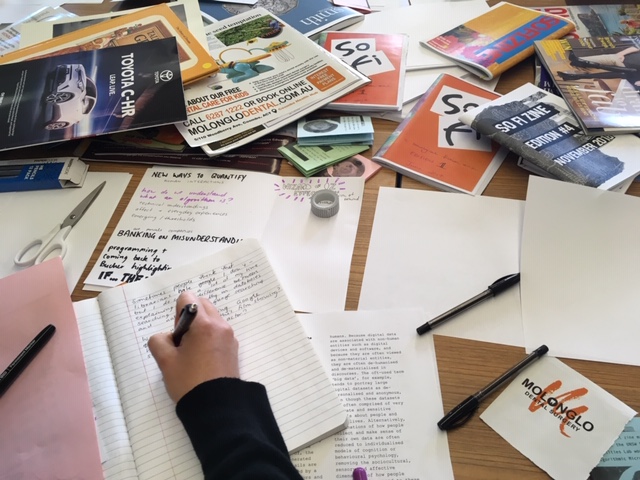
In this blog, the Vitalities Lab team members and visitors will publish news and reports about our research activities and events.
In this blog, the Vitalities Lab team members and visitors will publish news and reports about our research activities and events.
The Vitalities Lab presents a new salon for sharing arts-led and creative research in the more-than-human worlds we inhabit. This series is organised by Professor Deborah Lupton, Dr Bronwyn Bailey-Charteris, and Dr Anastasia Murney.
Each gathering offers a space for lively exchange across disciplines, exploring how creative methods can illuminate the vitalities that emerge when humans encounter non-human entities – other living beings, the four elements of earth, wind, air, and fire, geological features, and human-made objects, including built environments and digital devices.
Bringing together researchers, practitioners, artists, curators, thinkers, and the creatively curious, these salons feature special guests and activities that invite participants to engage with more-than-human entanglements in innovative and surprising ways.
Salon #3: Jennifer Mae Hamilton, Weathering
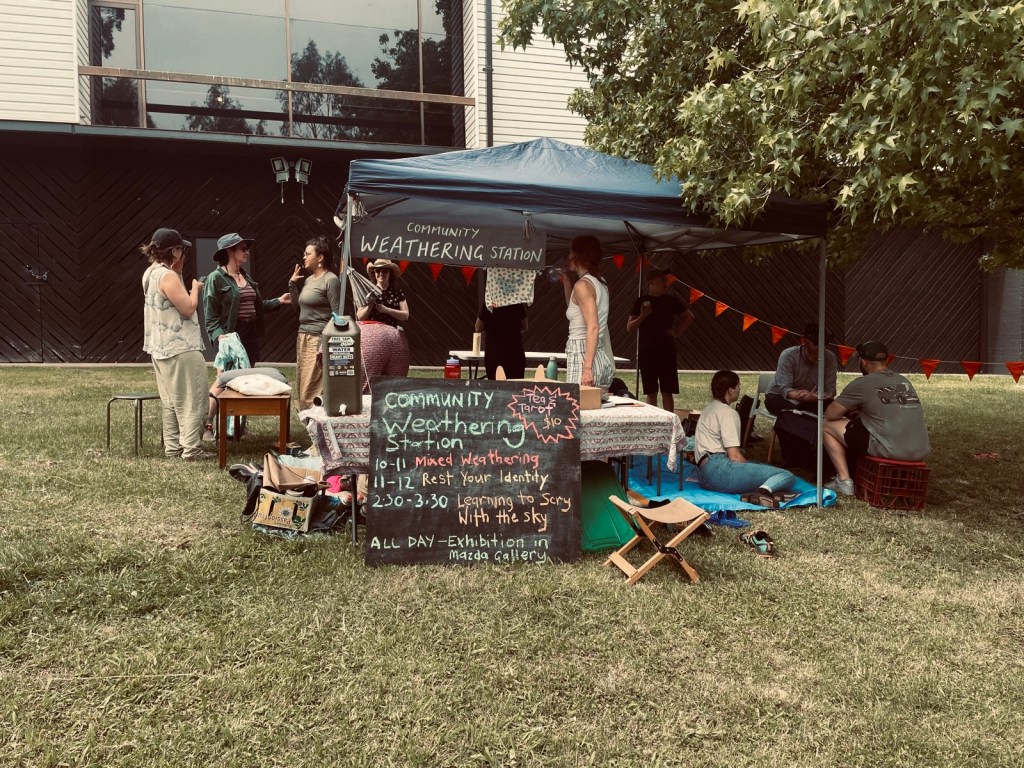
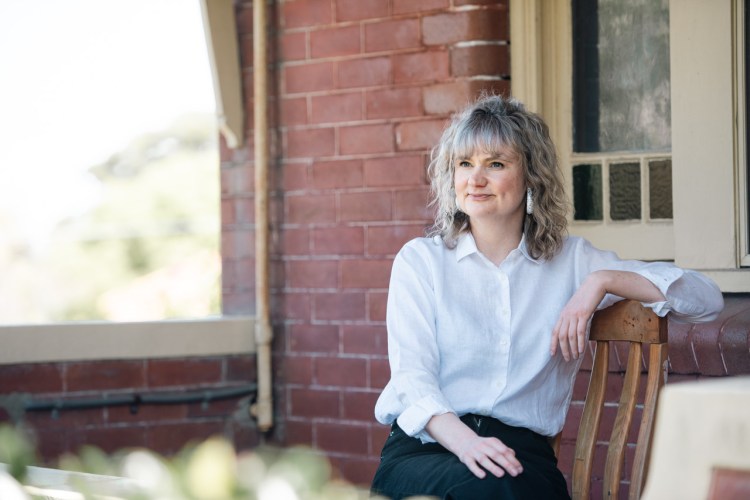
In this Salon, Dr Jennifer Mae Hamilton will briefly sketch the theoretical framework of weathering. This is further elaborated in their recently published book, How to Weather Together: Feminist Practice for Climate Change (Bloomsbury, 2026),co-authored with Astrida Neimanis and Tessa Zettel. Jennifer will share some concrete examples of their work in practice, including the Community Weathering Station (CoWS), Armidale Climate and Health Project (ACHP) and more recent studies in Shiatsu. They also hope to touch on some of the key concerns of their memoir fragment ‘Modes of Thermoregulation’ (TEXT, 2026) before opening into a discussion about embodiment, affect, the theory/practice nexus and the centrality of process.
Bios:
Dr Jennifer Mae Hamilton lives and works on Anaiwan Country as Senior Lecturer in Literary Studies at the University of New England (UNE), curator and community organiser. Her research explores climate change adaptation as an embodied process from a queer, feminist and anti-colonial perspective, using creative practice methods, community economies frameworks and close textual analysis. Her most recent publications are ‘Modes of Thermoregulation’ (TEXT, 2026) and co-authored with Astrida Neimanis, How to weather together: Feminist Practice for Climate Change (Bloomsbury Academic, 2026). She’s also the 2026 convenor of grassroots community transition organisation Sustainable Living Armidale and curated the group show How to weather together at New England Regional Art Museum November 2025–February 2026.
Professor Deborah Lupton is SHARP Professor in the Faculty of Arts, Design & Architecture, University of New South Wales (UNSW) Sydney, Australia. Her research is interdisciplinary, spanning sociology, media and cultural studies, and often involves arts-based and other creative methods for research and community engagement. She is located in the Centre for Social Research in Health and the Social Policy Research Centre, leading both the Vitalities Lab and the UNSW Node of the Australian Research Council Centre of Excellence for Automated Decision-Making and Society. Professor Lupton is an elected Fellow of the Academy of Social Sciences in Australia, the Australian Academy of Health and Medical Sciences and the Royal Society of NSW and has been awarded two honorary doctorates. She is the author/coauthor of 20 academic books and editor/co-editor of a further 11 volumes.
Dr Anastasia Murney is an artist, researcher, and award-winning educator living on unceded Gadigal land. She is a Postdoctoral Fellow in the Centre for Social Research in Health and The Vitalities Lab at the University of New South Wales (UNSW). She holds a PhD in Art Theory and Visual Culture (2021) and teaches across contemporary art, social movements, and environmental humanities. Anastasia has published her research in international peer-reviewed journals and edited books published by Routledge and Palgrave Macmillan. She has led creative arts workshops at the Australian Centre for Contemporary Art (ACCA), Wollongong Art Gallery, and Frontyard Projects in Marrickville, Sydney.
Dr Bronwyn Bailey-Charteris is an Australian-Swedish curator, writer, and researcher based on Dharug and Gundungurra Country. Her expertise lies in eco-aesthetics, curatorial theory, and water-based methodologies. She is a Postdoctoral Fellow and Senior Research Associate at UNSW within the ARC Centre of Excellence for Automated Decision-Making and Society (ADM+S). Bronwyn holds a PhD in curatorial theory and maintains an independent curatorial practice. Her research proposing the Hydrocene as a disruptive epoch is internationally recognized and is the focus of her monograph, The Hydrocene: Eco-Aesthetics in the Age of Water (Routledge, Environmental Humanities Series 2024).
WHEN: 13 November 2025
TIME: 3pm – 4:30pm
HOW TO JOIN: Via Microsoft Teams. Join the meeting now.
Further information:
How to Weather Together: Feminist Practice for Climate Change
How to Weather Together Sydney Book Launch Party
Leader of the Vitalities Lab, Deborah Lupton, has received funding from the Australian Research Council for a new project on ‘Atmospheres of Wellbeing’. Further details of the project can be found here.
The Vitalities Lab presents a new salon for sharing arts-led and creative research in the more-than-human worlds we inhabit. This series is organised by Professor Deborah Lupton, Dr Bronwyn Bailey-Charteris, and Dr Anastasia Murney.
Each gathering offers a space for lively exchange across disciplines, exploring how creative methods can illuminate the vitalities that emerge when humans encounter non-human entities – other living beings, the four elements of earth, wind, air, and fire, geological features, and human-made objects, including built environments and digital devices.
Bringing together researchers, practitioners, artists, curators, thinkers, and the creatively curious, these salons feature special guests and activities that invite participants to engage with more-than-human entanglements in innovative and surprising ways.
The arts of healing (including Tarot, oracle and divination cards, astrology, and more) are undergoing a revitalisation of sorts. Perhaps the prospect of societal collapse due to anthropogenic climate change is, in part, fueling a hunger for new/old tools and knowledges that can speak to profound feelings of emotional destabilisation and the confounding, existential forces that elude representation.
This Salon will reflect on how and why artists are incorporating the arts of healing into their practice. Is this representative of the limits of ‘rational’ knowledge-making systems? What is their relationship to the future? Can these methods help to develop strategies for ecological survival? What are the risks and complexities?
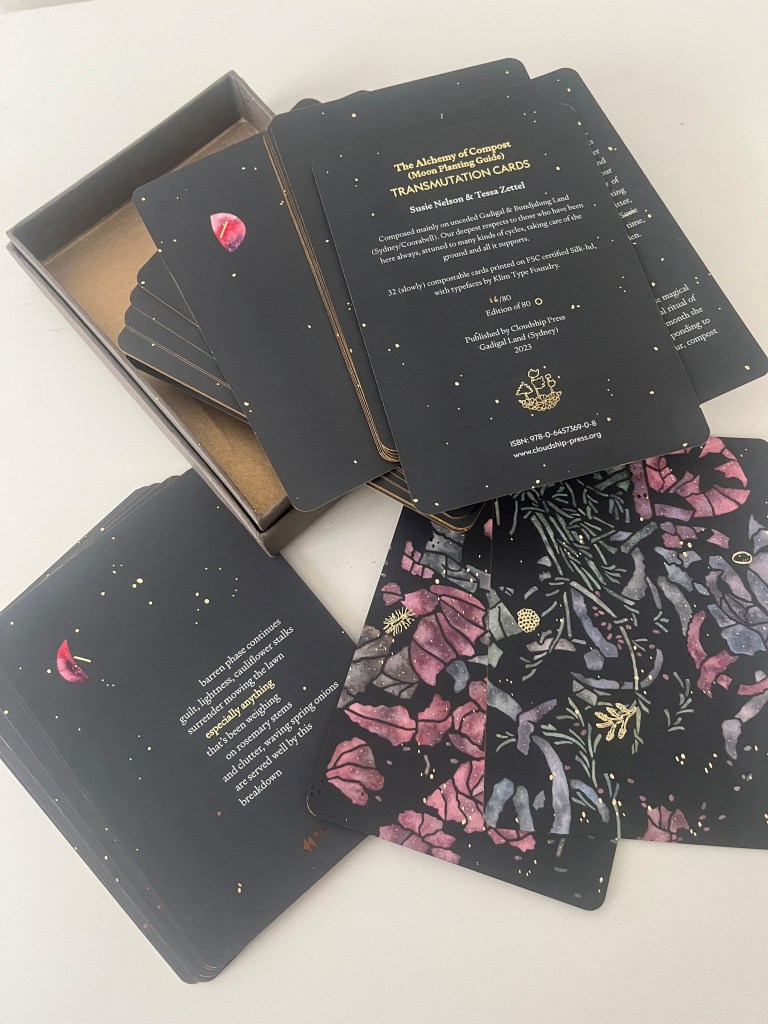
Tessa Zettel will discuss the activities of Cloudship Press and their focus on creating slow, handcrafted materials attentive to multispecies flourishing. She will share insights into the development of The Alchemy of Compost (Moon Planting Guide): Transmutation Cards (2023), a beautiful set of twenty-eight cards tracking one lunar cycle of compost, featuring watercolour drawings and poems held in a world of microbes. The cards can be read as a deconstructed chapbook, a dubious guide, a frippery, a cipher or a seed.
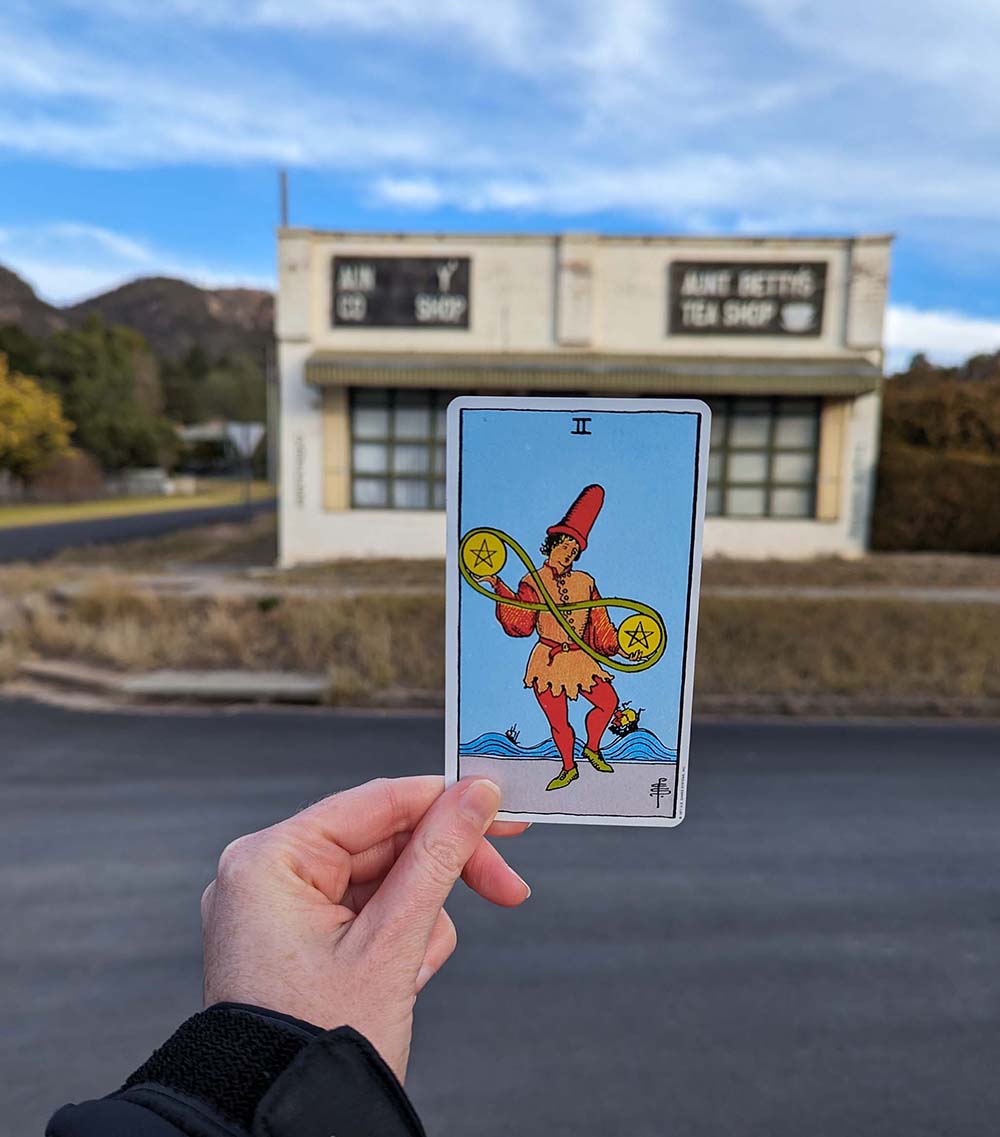
Anastasia Murney will discuss her facilitating of group Tarot readings in relation to climate crisis and anxiety. She approaches Tarot as a form of ‘affective cartography’, weaving together stories and emotions into unexpected arrangements. Her presentation will focus on Kandos Oracle, a socially engaged artwork-in-progress for the 2026 Cementa festival in Kandos on Dabee Wiradjuri land. This project reflects on the challenges facing regional communities and aims to produce a large-scale, participatory Tarot reading in response to a question formulated in collaboration with local people.
WHEN: 13 November 2025
TIME: 3pm – 4:30pm
HOW TO JOIN: Via Microsoft Teams. Join the meeting Now
Bios:
Tessa Zettel is an artist, writer and research working across disciplines to image and enact potential worlds. She collaborated variously with others on projects attending to more-than-human cultural relations and knowledge. These involve bringing everyday practices like foraging, fermenting, and composting into experimental, participatory forms of mapping, drawing, performance, publishing & exchange. Tessa is co-director of Frontyard Projects, the Weathering Collective, the T. Rudzinskaite Memorial Amateur Lichenologists Society, Collective Disaster and Cloudship Press.
Cloudship Press is a micro-publisher formed by Tessa Zettel & Susie Nelson in 2017 on Gadigal land, Sydney. They make slow, handcrafted publications that share skills for multispecies flourishing or forms of situated knowledge in need of circulation, usually as part of expanded live art projects and relational practices off the page.
Dr Anastasia Murney is an artist, researcher, and award-winning educator living on unceded Gadigal land. She is a Postdoctoral Fellow in the Centre for Social Research in Health and The Vitalities Lab at the University of New South Wales (UNSW). She holds a PhD in Art Theory and Visual Culture (2021) and teaches across contemporary art, social movements, and environmental humanities. Anastasia has published her research in international peer-reviewed journals and edited books published by Routledge and Palgrave Macmillan. She has led creative arts workshops at the Australian Centre for Contemporary Art (ACCA), Wollongong Art Gallery, and Frontyard Projects in Marrickville, Sydney.
Professor Deborah Lupton is SHARP Professor in the Faculty of Arts, Design & Architecture, University of New South Wales (UNSW) Sydney, Australia. Her research is interdisciplinary, spanning sociology, media and cultural studies, and often involves arts-based and other creative methods for research and community engagement. She is located in the Centre for Social Research in Health and the Social Policy Research Centre, leading both the Vitalities Lab and the UNSW Node of the Australian Research Council Centre of Excellence for Automated Decision-Making and Society. Professor Lupton is an elected Fellow of the Academy of Social Sciences in Australia, the Australian Academy of Health and Medical Sciences and the Royal Society of NSW and has been awarded two honorary doctorates. She is the author/coauthor of 20 academic books and editor/co-editor of a further 11 volumes.
Dr Bronwyn Bailey-Charteris is an Australian-Swedish curator, writer, and researcher based on Dharug and Gundungurra Country. Her expertise lies in eco-aesthetics, curatorial theory, and water-based methodologies. She is a Postdoctoral Fellow and Senior Research Associate at UNSW within the ARC Centre of Excellence for Automated Decision-Making and Society (ADM+S). Bronwyn holds a PhD in curatorial theory and maintains an independent curatorial practice. Her research proposing the Hydrocene as a disruptive epoch is internationally recognized and is the focus of her monograph, The Hydrocene: Eco-Aesthetics in the Age of Water (Routledge, Environmental Humanities Series 2024).
Further Information:

The Vitalities Lab presents a new salon for sharing arts-led and creative research in the more-than-human worlds we inhabit. This series is organised by Professor Deborah Lupton, Dr Bronwyn Bailey-Charteris, and Dr Anastasia Murney.
Each gathering offers a space for lively exchange across disciplines, exploring how creative methods can illuminate the vitalities that emerge when humans encounter non-human entities – other living beings, the four elements of earth, wind, air, and fire, geological features, and human-made objects, including built environments and digital devices. Bringing together researchers, practitioners, artists, curators, thinkers, and the creatively curious, these salons feature special guests and activities that invite participants to engage with more-than-human entanglements in innovative and surprising ways.
Salon #1: Vanessa Bartlett, Gut Waters
Gut Waters (Bankstown Arts Centre, 26 July–6 September 2025) is a new exhibition that explores the role of the human gut in reimagining our health and place in the world. It connects worlds inside and outside of our bodies, by linking digestion to Bankstown’s wastewater systems, moon cycles, and human poop transplants.
Dr Bartlett will discuss Gut Waters as an outcome of her four year long collaborative medical humanities project Stomach Ache. She will explore the process of translating lived experience-led and medical humanities research into curatorial research and practice, and how this can engender messy, awkward and generative research insights overlooked in more traditional approaches.
Professor Deborah Lupton and Dr Anastasia Murney will also introduce their ARC Discovery project on sociobiological immunity systems and the microbiome and an upcoming workshop in conjunction with Gut Waters on Saturday September 6. The workshop will invite participants to use craft materials to create a body map, encouraging them to think about what goes in and out of the gut, what does it look like, and how does it feel? It is designed to help participants to think differently about digestion.
WHEN: 4 September 2025
TIME: 3pm – 4:30pm
HOW TO JOIN: Via Microsoft Teams. Join the meeting now

Gut Waters, curated by Dr Vanessa Bartlett, exhibition at Bankstown Arts Centre, 26 July – 6 September 2025. Photo: Dean Qiulin Li.
Bios:
Dr Vanessa Bartlett is a visual art curator, arts and wellbeing specialist and artist. She brings art and people together to explore how equality, ethics and social justice are influenced by the medical and technical systems that shape our lives. She specializes in curating exhibitions and creative projects that explore themes of mental and physical health, disability justice and ethics and practices of care. She was McKenzie Postdoctoral Fellow in the School of Culture and Communication (2020–2023), and Research Fellow in the Faculty of Law (2024–2025), at the University of Melbourne.
Professor Deborah Lupton is SHARP Professor in the Faculty of Arts, Design & Architecture, University of New South Wales (UNSW) Sydney, Australia. Her research is interdisciplinary, spanning sociology, media and cultural studies, and often involves arts-based and other creative methods for research and community engagement. She is located in the Centre for Social Research in Health and the Social Policy Research Centre, leading both the Vitalities Lab and the UNSW Node of the Australian Research Council Centre of Excellence for Automated Decision-Making and Society. Professor Lupton is an elected Fellow of the Academy of Social Sciences in Australia, the Australian Academy of Health and Medical Sciences and the Royal Society of NSW and has been awarded two honorary doctorates. She is the author/coauthor of 20 academic books and editor/co-editor of a further 11 volumes.
Dr Bronwyn Bailey-Charteris is an Australian-Swedish curator, writer, and researcher based on Dharug and Gundungurra Country. Her expertise lies in eco-aesthetics, curatorial theory, and water-based methodologies. She is a Postdoctoral Fellow and Senior Research Associate at UNSW within the ARC Centre of Excellence for Automated Decision-Making and Society (ADM+S). Bronwyn holds a PhD in curatorial theory and maintains an independent curatorial practice. Her research proposing the Hydrocene as a disruptive epoch is internationally recognized and is the focus of her monograph, The Hydrocene: Eco-Aesthetics in the Age of Water (Routledge, Environmental Humanities Series 2024).
Dr Anastasia Murney is an artist, researcher, and award-winning educator living on unceded Gadigal land. She is a Postdoctoral Fellow in the Centre for Social Research in Health and The Vitalities Lab at the University of New South Wales (UNSW). She holds a PhD in Art Theory and Visual Culture (2021) and teaches across contemporary art, social movements, and environmental humanities. Anastasia has published her research in international peer-reviewed journals and edited books published by Routledge and Palgrave Macmillan. She has led creative arts workshops at the Australian Centre for Contemporary Art (ACCA), Wollongong Art Gallery, and Frontyard Projects in Marrickville, Sydney.
Further Information:

 Vitalities Lab