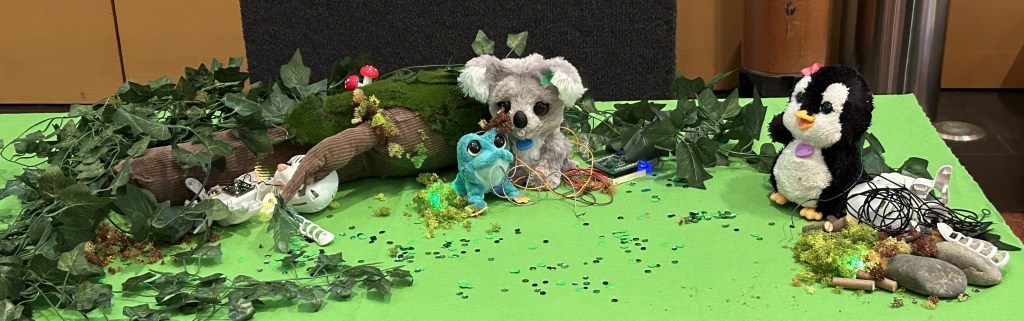
For the recent ARC Centre of Excellence for Automated Decision-Making and Society annual symposium, Deborah Lupton and Megan Rose mounted an exhibit called Animal Robot Island.
With this installation, we seek to surface the broader difficult issues of the environmental impacts of AI and automated technologies, acknowledging that human and planetary health are intertwined and interdependent. This installation is part of the Centre of Excellence’s new signature project on ADM, Ecosystems and Multispecies Relationships. As contributors to this project, we are exploring the relational and affective ties that are generated when humans come together with robotic animal devices. We seek to make connections between the ethical issues that are raised concerning the benefits and harms of human-animal and human-robot relationships.
Our research asks the following questions:
- What can help us live better with our robotic animal companions in ways that benefit humans without harming the environment and other animals and living things?
- What do we like about robotic animals?
- What do we find creepy or discomforting about them?

Animal Robot Island is inhabited by robotic animal creatures living together in apparent harmony. Its visual appearance is inspired by the popular Nintendo video game Animal Crossing, a social simulation game which invites players to create a village inhabited by cute anthropomorphic animal creatures. Animal Crossing was created to encourage players to engage with the simulated ‘natural’ world by cultivating plants, fruit picking, collecting seashells, catching insects, fishing and hunting for fossils as well as living alongside the animal creatures in the village.

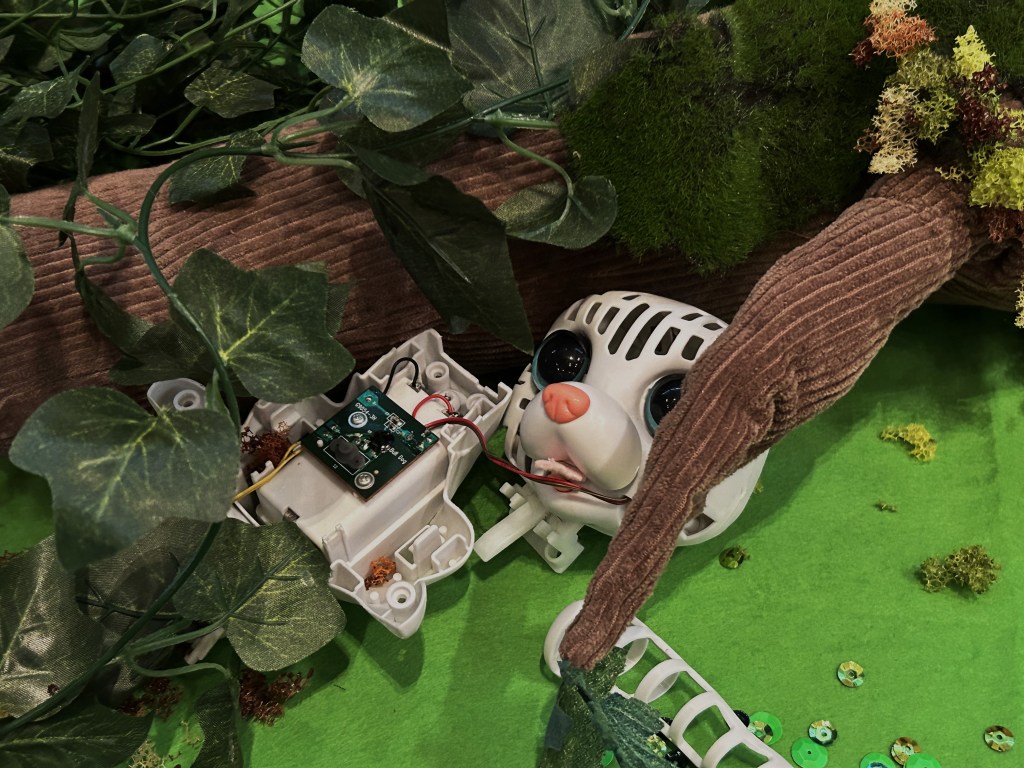
Like Animal Crossing, Animal Robot Island is a soft, welcoming space, with references to kawaii (Japanese cute culture) and gamification of animals for care, connection, comfort and entertainment. But there are hints at a darker, more sinister underbelly of this apparently sweet, colourful world. We reflect on the question of how these kinds of idealised communities/ecosystems harm the ‘real’ natural environment and wonder what happens to these creatures when they ‘die’? Where do their ‘remains’ (the waste left behind by their electronic, plastics and fabric components) go?
 Vitalities Lab